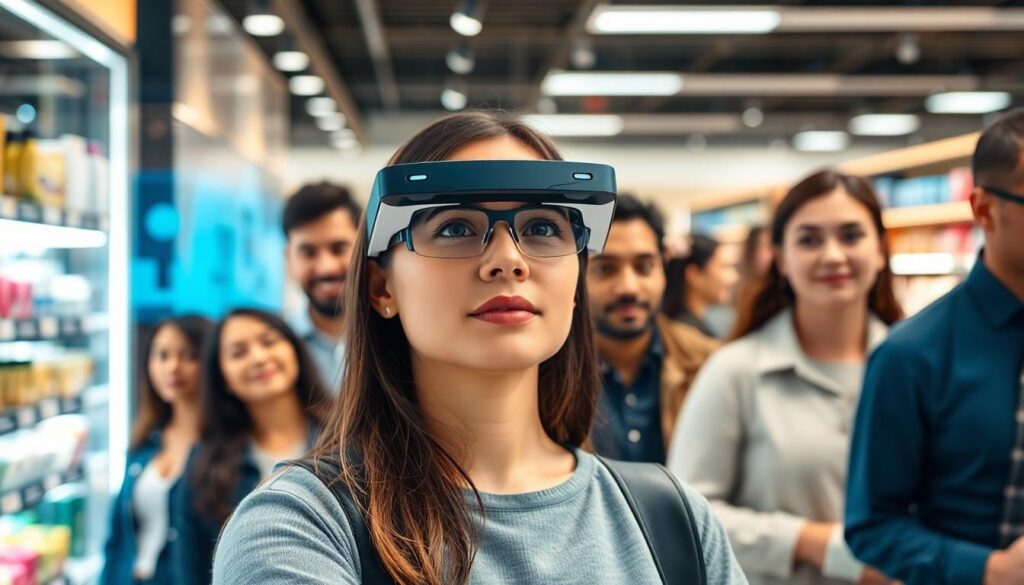
In a world where reality sometimes feels a bit too ordinary, augmented reality (AR) swoops in like a superhero with a cape made of pixels. It’s not just for gamers anymore; businesses are discovering that AR can transform how they connect with customers. Imagine walking into a store and seeing a virtual assistant pop up to guide you to the perfect product—now that’s shopping with a twist!
Overview of Augmented Reality Service Providers
Augmented reality (AR) service providers play a crucial role in delivering immersive experiences across various sectors. They create innovative solutions that integrate digital content with the physical world.
Definition of Augmented Reality
Augmented reality seamlessly blends computer-generated elements with real-world environments. AR enhances a user’s perception of reality by overlaying digital information, such as graphics and sounds, on their view of the physical world. Users access this technology through devices like smartphones, tablets, and AR glasses. By shifting the focus from traditional displays to interactive environments, augmented reality enriches user experiences, making them more engaging and informative.
Importance of Augmented Reality in Various Industries
Augmented reality has transformed industries by enhancing customer engagement and operational efficiency. Retailers utilize AR to create virtual fitting rooms, allowing customers to visualize products before purchase. In healthcare, AR aids in surgical procedures by providing real-time data and 3D models. Architecture benefits as well, with AR allowing clients to visualize designs in real settings. Education incorporates augmented reality to create interactive learning experiences, promoting deeper understanding. The automotive industry employs AR for maintenance training, enabling technicians to visualize complex systems. These examples illustrate how augmented reality service providers drive innovation and improve service delivery across diverse sectors.
Key Features of Augmented Reality Service Providers

Augmented reality service providers offer essential features designed to enhance user experiences across sectors. These features play a pivotal role in implementing effective AR solutions.
Customization and Scalability
Customization allows businesses to tailor AR experiences to specific audience needs. Each organization can modify content and functionality, ensuring relevance. Scalability enables these experiences to grow with the business. Providers support varied deployment scenarios, from small-scale applications to enterprise-wide initiatives. As companies expand, AR solutions adjust seamlessly, maintaining performance and user engagement across larger platforms. Such flexibility enhances overall operational efficiency, making AR more accessible and impactful.
Integration with Existing Systems
Integration enhances functionality by connecting AR solutions to current systems. Many organizations rely on existing data sources and workflows, so maximizing compatibility becomes crucial. Well-designed AR service providers offer APIs that facilitate smooth interactions. This connectivity ensures users access real-time data, driving informed decisions during AR interactions. Moreover, enhanced collaboration among departments results from integrating AR systems with tools already in use. Such synergy ultimately streamlines operations and boosts productivity across diverse sectors.
Leading Augmented Reality Service Providers
Numerous companies excel in augmented reality services, each contributing uniquely to various sectors.
Provider 1: Overview and Services
Provider 1 specializes in developing customized AR solutions for retail environments. Their services include virtual fitting rooms that allow consumers to try on clothes digitally, enhancing the shopping experience. Retailers benefit from data analytics provided by this company, which helps them understand customer preferences and behaviors in real-time. This provider also integrates AR technology with existing inventory systems, ensuring seamless operations.
Provider 2: Overview and Services
Provider 2 focuses on transforming training and education through augmented reality applications. Offering interactive learning environments, it engages users in hands-on experiences that boost retention and understanding. This provider implements AR for practical training in fields such as healthcare and automotive, where real-world simulations are crucial. Additionally, dedicated support for institutions facilitates the deployment of AR tools, fostering an innovative educational landscape.
Provider 3: Overview and Services
Provider 3 delivers immersive AR experiences for architecture and construction industries. Through design visualization, architects and builders can present their concepts in an interactive format that enhances stakeholder communication. Clients receive tools to view 3D models in real-time, leading to improved decision-making and client satisfaction. This provider ensures smooth integration with CAD software, allowing for streamlined project workflows and efficient collaboration.
Factors to Consider When Choosing an Augmented Reality Service Provider
Selecting the right augmented reality service provider involves several critical factors that can significantly impact a project’s success. Consider these key elements when making a choice.
Budget and Pricing Models
Budget plays a pivotal role in choosing an AR service provider. Providers offer varied pricing models, such as fixed-price contracts, hourly billing, or subscription rates. Assessing these models helps determine which one aligns with the project’s financial constraints. Some companies may charge based on complexity or time invested, so it’s essential to clarify all costs upfront. Transparent pricing can prevent unexpected expenses later on. Additionally, consider the return on investment associated with the proposed solutions. Higher initial costs may yield greater long-term benefits through enhanced customer engagement or operational efficiency.
Customer Support and Service Level Agreements
Customer support quality can significantly influence user experience with AR solutions. Effective providers offer robust customer support, including technical assistance and training programs. Evaluate their support system to ensure it meets ongoing maintenance and troubleshooting needs. Service Level Agreements (SLAs) should outline expected response times, resolution processes, and support coverage. A clear SLA emphasizes the provider’s commitment to service and accountability. Prioritizing providers with proven track records in customer satisfaction can also benefit the project in the long run. A reliable partner enhances collaboration and ensures successful implementation of AR technologies.
Augmented reality service providers are at the forefront of transforming how businesses engage with their customers. By offering tailored and scalable AR solutions, these providers enhance user experiences across various industries. Their ability to integrate AR technology with existing systems makes it easier for organizations to streamline operations and boost productivity.
As AR continues to evolve, the importance of choosing the right service provider becomes increasingly clear. A reliable partner not only ensures seamless implementation but also fosters innovation that can lead to significant competitive advantages. Embracing augmented reality is no longer just an option; it’s a strategic necessity for businesses looking to thrive in a dynamic market.