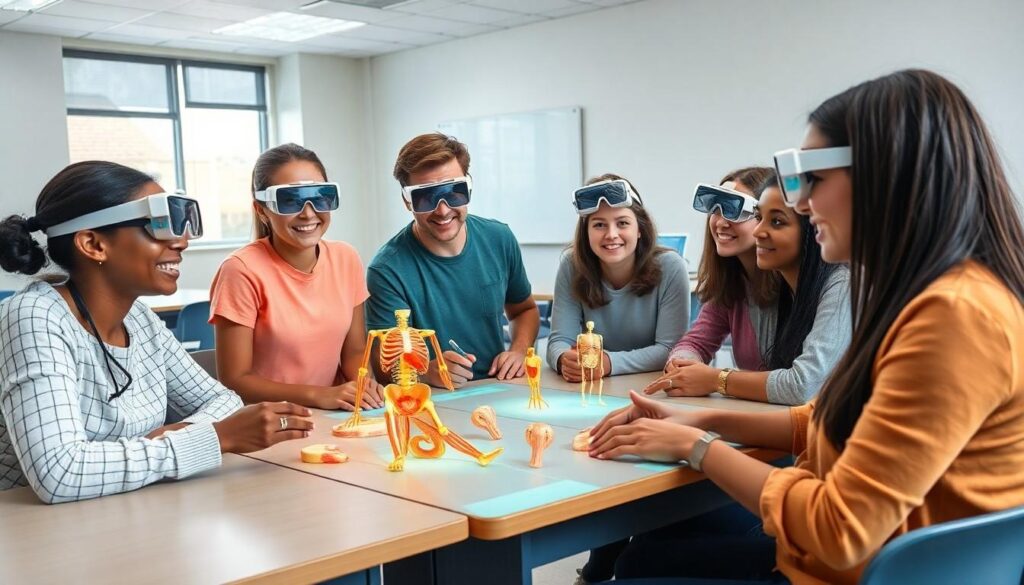
Imagine walking into a classroom where textbooks come to life and history lessons involve time travel. Welcome to the world of augmented reality education, where learning isn’t just engaging—it’s downright magical. This innovative technology overlays digital content onto the real world, transforming mundane lectures into interactive adventures that captivate students’ imaginations.
Gone are the days of snoozing through dull presentations. With augmented reality, students can explore complex concepts in three dimensions, making learning not just easier but also a lot more fun. It’s like giving every student their own personal wizard to help them understand the wonders of science, math, and history. As educators embrace this tech-savvy approach, the future of learning looks brighter than ever. Buckle up—it’s time to dive into how augmented reality is reshaping education and why it might just be the key to unlocking every student’s potential.
Overview Of Augmented Reality Education
Augmented reality in education serves as a groundbreaking tool that merges traditional learning methods with digital enhancements. It promotes interaction and engagement through immersive experiences, allowing students to visualize complex concepts. Learning materials can become far more appealing when they include AR elements.
AR applications vary significantly in their implementation. For example, anatomy lessons benefit from 3D models of human organs, while historical environments can come to life through time travel simulations. Each application provides students with an opportunity to interact with content that traditional textbooks do not offer.
Teachers also find augmented reality useful for tailoring lessons to fit diverse learning styles. Interactive lessons cater to visual, auditory, and kinesthetic learners. Moreover, AR fosters collaboration among students, prompting them to work together on projects or explore shared experiences.
The global market for augmented reality in education is expected to grow substantially. Statista reports that revenue for AR education could reach about $5.3 billion by 2023. This growth reflects the increasing demand for innovative teaching tools that enhance student learning outcomes.
Educational institutions are not the only ones adopting augmented reality. Businesses increasingly utilize AR for training and skill development, preparing employees for real-world applications. This trend indicates a broader shift toward integrating AR technologies within various educational contexts.
Implementing augmented reality in classrooms encourages lifelong learning habits. By sparking curiosity and promoting exploration, AR supports a more engaging educational environment. As such, its impact continues to shape how knowledge is delivered and received in classrooms around the world.
Benefits Of Augmented Reality In Learning

Augmented reality significantly enhances the learning experience by integrating digital content into the physical world. This immersive technology fosters greater interaction and creativity among students.
Enhanced Engagement
Engagement levels soar when augmented reality is implemented in classrooms. Students actively participate in lessons, exploring subjects through interactive 3D models. Interactive elements stimulate interest and motivation, making learning enjoyable. Teachers notice increased focus when lessons incorporate AR, as students can visualize concepts beyond static images. Engaging experiences encourage discussions and collaborative projects, fostering teamwork and communication skills. The immersive aspect allows students to experiment with real-world scenarios, deepening their understanding of complex topics. Ultimately, AR transforms traditional learning into an exciting adventure.
Improved Retention
Retention of information improves significantly with augmented reality tools. By providing visual and interactive representations, students grasp concepts more readily. Studies indicate that the combination of digital content and real-world context aids memory recall. Students exposed to AR experiences often retain information longer than those using traditional methods. This technology encourages active participation, allowing learners to engage with material directly. Immersive experiences create lasting impressions, facilitating deeper learning. By connecting digital elements to tangible objects, AR makes abstract concepts more concrete and memorable. Enhanced retention fosters a more effective educational environment.
Applications Of Augmented Reality In Education
Augmented reality (AR) finds extensive applications across various educational sectors, enhancing both learning and engagement.
K-12 Education
AR transforms K-12 education by making lessons immersive and interactive. Students can visualize complex subjects, like science and math, through 3D models and simulations. For instance, anatomy lessons allow learners to explore the human body in real time. Teachers use AR tools to tailor content to different learning styles, enhancing comprehension. Engaging educational games incorporated into AR platforms foster collaboration, helping students learn effectively while having fun.
Higher Education
In higher education, AR enhances research and practical training. Medical students benefit from virtual dissections and simulated surgeries, allowing them to practice without risk. Engineering programs utilize AR for visualizing structures and mechanics, aiding in complex project comprehension. Students in history classes explore historical sites interactively, gaining deeper insights into their studies. These technologies promote active learning, making subjects come alive in unexpected ways.
Corporate Training
Corporate training utilizes AR to provide hands-on experience in various industries. Employees can engage with virtual models, practicing skills in a simulated environment. For example, AR assists in training for areas like manufacturing and healthcare by replicating real-world scenarios without the associated costs. Assessments often incorporate AR to offer immediate feedback, enhancing learning efficiency. Companies increasingly invest in AR technologies to improve workforce readiness and skill retention.
Challenges And Limitations
Augmented reality in education faces several challenges and limitations that can impact its effectiveness.
Technological Barriers
Technological barriers hinder the widespread adoption of AR in educational settings. Many schools lack the necessary infrastructure, such as high-speed internet or compatible devices. Limited access to AR-ready tools can exclude students from engaging in immersive learning experiences. Updates and maintenance of AR software also present challenges, consuming time and resources. Difficulty in integrating AR with existing curricula may reduce its overall effectiveness. Unequal access to technology could widen the digital divide, affecting students’ learning opportunities.
Cost Implications
Cost implications represent a significant concern for institutions considering AR implementation. Initial investments in AR hardware and software can strain budgets, especially for resource-limited schools. Licensing fees for AR content may create recurring costs for educators. Training teachers to effectively use AR tools requires additional financial resources and time commitments. Many institutions face uncertainty about the return on investment in AR technologies, impacting decision-making processes. Schools must carefully evaluate the long-term benefits versus the upfront expenses associated with adopting AR in the classroom.
Future Trends In Augmented Reality Education
Emerging trends in augmented reality (AR) education indicate significant advancements in technology integration. Innovations will likely enhance personalized learning experiences that cater to individual student needs. Adaptive learning platforms powered by AR can analyze student progress in real time, adjusting content delivery for optimal comprehension.
Incorporating artificial intelligence into AR applications can facilitate smarter educational tools that provide tailored feedback. Educational institutions may prioritize immersive experiences, such as virtual laboratories and historical recreations, expanding students’ practical skills without physical limitations. The combination of AR and virtual reality (VR) for fully immersive learning environments gains traction, enabling students to engage with complex subjects in groundbreaking ways.
Scalable AR solutions will emerge as more affordable options for institutions, allowing broader access to this technology. Research indicates that by 2025, the global AR education market might exceed $10 billion. This projected growth highlights a robust investment landscape, prompting developers to create user-friendly AR tools for educators and students alike.
Collaborative opportunities could flourish as AR facilitates peer-to-peer learning in ways traditional methods cannot. Additionally, educators may embrace analytics-driven insights from AR platforms to identify learning gaps and enhance instructional strategies.
Gamification strategies will blend with AR, fostering a more dynamic and competitive learning environment that engages students. The potential for AR to address diverse learning preferences continues to expand, shaping the future of educational practices.
Augmented reality is revolutionizing education by creating immersive learning experiences that engage students like never before. As AR technology continues to evolve, its potential to enhance understanding and retention of complex subjects becomes increasingly apparent. The integration of AR into classrooms not only fosters collaboration but also caters to diverse learning styles, making education more inclusive.
While challenges such as cost and accessibility remain, the future of AR in education looks promising. With projected market growth and ongoing technological advancements, educational institutions are poised to embrace AR as a vital tool for enhancing teaching and learning. As AR paves the way for innovative educational practices, it’s clear that this technology will play a crucial role in shaping the future of knowledge delivery.