
Augmented reality is shaking up the medical world in ways that feel straight out of a sci-fi movie. Imagine surgeons wearing sleek AR glasses that project 3D images of organs right in front of their eyes. It’s like having a superpower, but instead of fighting crime, they’re saving lives. This technology isn’t just a flashy gimmick; it’s revolutionizing how doctors diagnose, treat, and educate.
As healthcare professionals embrace this cutting-edge innovation, patients can expect more precise treatments and enhanced understanding of their conditions. From virtual anatomy lessons to real-time surgical guidance, augmented reality is turning the medical field upside down—while keeping it hilariously serious. Get ready to explore how this tech is not just augmenting reality but also transforming the future of medicine into something truly extraordinary.
Overview of Augmented Reality Medical
Augmented reality (AR) has become a vital tool in the medical field, transforming how healthcare professionals approach diagnostics and treatment. Surgeons utilize AR glasses to overlay 3D images of organs, improving accuracy during surgical procedures. This technology enhances patient safety by minimizing risks and reducing recovery times.
Medical education benefits significantly from AR, as students can engage with realistic simulations of procedures and anatomy. Trainees gain hands-on experience without the need for real patients, making the learning process safer and more effective. In addition, interactive educational content fosters better understanding and retention of complex medical concepts.
Patients also reap the rewards of AR innovations. When physicians use AR to explain diagnoses and treatment plans, it leads to improved patient engagement and satisfaction. Visual aids help clarify medical jargon, allowing patients to grasp their health conditions better.
Several studies support the positive impact of AR on healthcare. Research indicates that integrating AR in surgical training leads to enhanced skills and confidence among surgeons. A survey found that 80% of medical practitioners believe AR will play a crucial role in patient care within the next decade.
Organizations continue to explore AR applications in telemedicine, allowing remote consultations to take on a more interactive and visual dimension. By combining AR with other technologies, such as artificial intelligence, practitioners can develop personalized treatment plans tailored to individual patient needs.
As AR technology evolves, its integration within healthcare systems promises a future filled with potential, where innovative techniques redefine patient care and medical training.
Applications of Augmented Reality in Healthcare
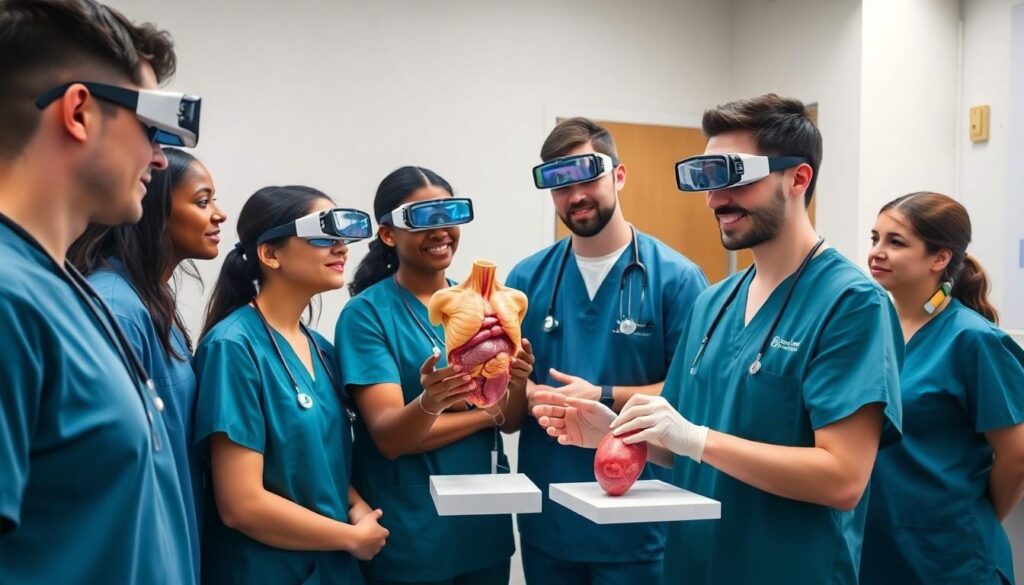
Augmented reality (AR) is revolutionizing healthcare through various innovative applications. Its impact spans medical training, patient interactions, and treatment planning.
Surgical Training and Simulation
Surgical training benefits immensely from AR. Educators utilize AR simulations to provide students with realistic experiences in a risk-free environment. Trainees explore 3D anatomical models, enhancing their spatial awareness and understanding of complex procedures. This immersive approach cultivates skillful surgeons, preparing them for real-life scenarios. Programs incorporating AR have shown improved retention of knowledge and techniques among students, leading to better outcomes in practice.
Patient Education and Engagement
Patient education improves significantly with AR technology. Physicians employ AR visualizations to illustrate diagnoses and treatment plans clearly. Engaging patients with interactive content fosters better comprehension of their health conditions. Treatment options become more tangible through AR, increasing patient confidence in medical decisions. Enhanced communication not only helps in adherence to treatment plans but also boosts overall patient satisfaction and involvement in their care pathways.
Diagnostics and Treatment Planning
Diagnostics and treatment planning experience a boost from AR applications. Doctors assess patient conditions through AR overlays that display essential data in real time. Such visual aids allow for more informed decisions during patient evaluations and procedure planning. By accessing detailed 3D images of anatomy, healthcare professionals can identify issues with greater precision. This level of detail enhances the accuracy of diagnoses and optimizes treatment strategies, ultimately improving patient outcomes.
Benefits of Augmented Reality Medical
Augmented reality significantly enhances medical practices. This technology leads to transformative experiences for both healthcare providers and patients.
Enhanced Learning Experiences
Students gain access to interactive simulations that portray real-life medical scenarios. Medical learners interact with 3D models of anatomy, which fosters deeper understanding and retention. Engaging in risk-free practice, students refine their skills through AR, preparing them for actual medical environments. This hands-on approach not only boosts confidence but also strengthens spatial awareness. Traditional methods often lack these advantages, making AR a crucial supplement in medical education.
Improved Patient Outcomes
AR aids healthcare professionals in providing clear, visual explanations of diagnoses and treatment plans. Enhanced communication between physicians and patients leads to improved patient engagement and satisfaction. With real-time data displayed during consultations, practitioners can make informed decisions that optimize care. Research indicates that utilizing AR can decrease recovery times and minimize surgical risks. These advancements ultimately contribute to better health results and a more positive experience for patients.
Challenges and Limitations
Implementing augmented reality in medicine presents several challenges. Technical and ethical considerations play a significant role in the effective use of AR technology.
Technical and Ethical Considerations
AR applications require robust hardware and reliable software. Without the necessary infrastructure, users may encounter issues like connectivity and latency. Ethical concerns also arise, particularly regarding patient privacy and data security. Safeguarding sensitive information during AR interactions is crucial for maintaining trust. Regulations surrounding data use must align with AR deployment to ensure compliance. Developers must prioritize these technical and ethical standards to maximize AR’s benefits in healthcare.
Adoption Barriers in Healthcare Settings
Adopting AR technology faces multiple barriers within healthcare settings. Initial costs for AR systems can discourage institutions from investing. Staff training represents another hurdle; a well-trained workforce is essential for AR integration. Resistance from practitioners, who may question the technology’s effectiveness compared to traditional methods, poses additional challenges. Integrating AR into existing workflows requires careful consideration and planning to ensure seamless operation. Addressing these barriers will facilitate a smoother transition to augmented reality in healthcare.
Future Trends in Augmented Reality Medical
Emerging trends indicate that augmented reality will continue revolutionizing medical practices. Significant advancements appear to enhance surgical precision. Visual overlays of 3D organ models facilitate a comprehensive understanding for surgeons during operations. This progression promises increased patient safety and minimized risks.
Medical education also sees exciting developments. Interactive simulations allow students to engage with intricate procedures. Innovative platforms provide real-time scenarios, fostering better learning experiences. The use of AR tools in classrooms enhances knowledge retention and practical skills.
Telemedicine stands poised for transformative changes with AR technology. Remote consultations become more interactive and engaging when combined with visual aids. Patients benefit through improved understanding of their health concerns. Enhanced communication during virtual visits leads to more informed decisions.
Research supports the notion that AR improves treatment planning. Real-time data integration allows practitioners to visualize critical information during consultations. Such capabilities enable healthcare professionals to devise optimal care strategies quickly.
Organizations are investing heavily in AR applications. By prioritizing user-friendly interfaces, they aim to streamline adoption in medical settings. Collaborative efforts between technology providers and healthcare institutions will address existing challenges. Strategies should focus on overcoming barriers like high costs and training requirements for staff.
Ethical considerations in AR implementation remain vital. Safeguarding patient privacy and data integrity takes precedence. Establishing robust protocols ensures trust in these technologies. The integration of augmented reality in healthcare promises to unfold numerous possibilities, creating a foundation for better patient outcomes.
The integration of augmented reality in the medical field marks a significant leap toward enhanced patient care and medical education. As AR technology continues to evolve it promises to reshape how healthcare professionals interact with patients and each other. The potential for improved surgical precision and better patient understanding cannot be overstated.
With ongoing investments and innovative applications AR is set to become an indispensable tool in modern medicine. By bridging the gap between complex medical concepts and practical understanding AR fosters a more engaged and informed patient population. The future of healthcare looks brighter as augmented reality paves the way for transformative changes that ultimately lead to better health outcomes.